Showing posts with label women's literature. Show all posts

Friday, June 26, 2015

Discovering George Eliot

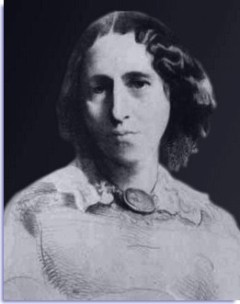
 george eliotI remember my mother telling me that she didn't appreciate SILAS MARNER until she read it as an adult. Maybe that's why George Eliot never made it on the reading lists for AP English in High School or for any of my liberal artsy classes throughout College. Or maybe it's a function of her gender, still working against her after all these years. Whatever the case, I had to wait until after college to discover her on my own, just as I had with Virginia Woolf and Carson McCullers and Eudora Welty.

I'd read SILAS MARNER and thought it good, but it's MIDDLEMARCH that has made  me a devotee, with its rich complexity of human experience, wrought in compassionate yet unflinching detail. And now, I'm reading MY LIFE IN MIDDLEMARCH, by Rebecca Mead, and finding there is so very much more to love about George Eliot as a person, too.

Her life is a reminder to me that lives can, do and have traveled many and varied roads, and that human beings change and grow and shift over time. In today's age of social media's curated lives, it's easy to fall back on the notion that there is a "right" kind of life to have - the kind portrayed in the media and then reinforced by our own hands through our culled and cropped and sanitized facebook posts. George Eliot was complicated and shifting, a brilliant, ugly, opinionated working woman, religious and then not, a stepmother of sorts, living for years with another woman's husband as if he were hers and his children were hers, a woman moving fiercely and confidently through a man's world, grabbing hold of her identity, opening herself to belief, experience, love, change. Her work is full to bursting with the varied truths of human life, forcing us to look at and understand a full tapestry of characters shaded in grays, not black and whites, characters whose lives are not writ large and grand but march in the middle (which I believe is the intent of that title).

I am tremendously excited by the prospect of reading her other works, more excited, at the moment, than I am about working on my own writing. Perhaps I am beset a bit by the humility that always overcomes me when I stand face to face with truly great literature, and then look back at the dwarfed image of my own work. But writers read, and become better writers in the process, and I can think of no better mentor, just now, than George Eliot, nee Mary Ann Evans.

Saturday, March 17, 2012

A Room of One's Own: Honoring a Literary Foremother


[Apologies for this longer-than-usual post, but I believe it's worth the space during Women's History Month.  To hear an mp3 of this piece, go to this link on my website.]

As a woman and a writer, I think of Virginia Woolf as one of my foremothers.  Whenever I read Woolf’s 1928 essay A ROOM OF ONE’S OWN, I am struck again by the truth of it and the profound sense of my own role in the great arc of the history of my gender.  Woolf's essay is an incredible, wide-ranging exploration, of which I have chosen a very small piece to share here.
Woolf begins by stating what she calls a “minor opinion”:  a woman must have money and a room of her own if she is to write fiction...
She goes on to imagine a visit to a British men’s college where she is barred entry to the library because she is a woman.  While dining with a friend, she contrasts the great history of wealth and resources at the foundation of the all-male college with the woefully limited resources of Fernham, the nearby women’s college, founded by women and for women.
At the thought of all those women working year after year and finding it hard to get two thousand pounds together, and as much as they could do to get thirty thousand pounds, we burst out in scorn at the reprehensible poverty of our sex. What had our mothers been doing then that they had no wealth to leave us? Powdering their noses? ...  
There were some photographs on the mantelpiece. Mary's mother--if that was her picture--may have been a wastrel - in her spare time (she had thirteen children by a minister of the church) - but, if so, her gay and dissipated life had left too few traces of its pleasures on her face. ...  
Now if she had gone into business; had become a manufacturer of artificial silk or a magnate on the Stock Exchange; if she had left two or three hundred thousand pounds to Fernham, we could have been sitting at our ease to-night and the subject of our talk might have been archaeology, ... physics, ... mathematics, ... relativity .... If only Mrs Seton and her mother and her mother before her had learnt the great art of making money and had left their money, like their fathers and their grandfathers before them, to found fellowships and lectureships and prizes and scholarships appropriated to the use of their own sex, we might have dined very tolerably up here alone off a bird and a bottle of wine .... We might have been exploring or writing; mooning about the venerable places of the earth; sitting contemplative on the steps of the Parthenon....  
Only, if Mrs Seton and her like had gone into business at the age of fifteen, there would have been ... no Mary. ... For, to endow a college would necessitate the suppression of families altogether. Making a fortune and bearing thirteen children--no human being could stand it.  
... First there are nine months before the baby is born. Then the baby is born. Then there are three or four months spent in feeding the baby. After the baby is fed there are certainly five years spent in playing with the baby. ... If Mrs Seton, I said, had been making money, what sort of memories would you have had of games and quarrels? What would you have known of Scotland, and its fine air and cakes and all the rest of it?  But it is useless to ask these questions, because you would never have come into existence at all.  
Moreover, it is equally useless to ask what might have happened if Mrs Seton and her mother and her mother before her had amassed great wealth and laid it under the foundations of college and library, because, in the first place, to earn money was impossible for them, and in the second, had it been possible, the law denied them the right to possess what money they earned. It is only for the last forty-eight years that Mrs Seton has had a penny of her own. For all the centuries before that it would have been her husband's property...  
So we talked standing at the window and looking, as so many thousands look every night, down on the domes and towers of the famous city beneath us. ... One thought of all the books that were assembled down there; ... of the urbanity, the geniality, the dignity which are the offspring of luxury and privacy and space. Certainly our mothers had not provided us with any thing comparable to all this--our mothers who found it difficult to scrape together thirty thousand pounds, our mothers who bore thirteen children to ministers of religion at St Andrews.
Woolf ponders what effect poverty has on the mind; and what effect wealth has on the mind.   She thinks about
... how unpleasant it is to be locked out; and ... how it is worse perhaps to be locked in; ... about the safety and prosperity of the one sex and  the poverty and insecurity of the other and  the effect of tradition and  the lack of tradition upon the mind of a writer. 
Woolf goes to the British Musuem and finds it odd how many books about women were written by men.  Finally, she imagines what might have happened if Shakespeare had had a sister, as gifted as he, and how impossible it would have been for the genius of Shakespeare’s sister ever to have found the light, let alone lived to see posterity.  And then she concludes:
Now my belief is that this poet who never wrote a word and was buried at the cross-roads still lives. She lives in you and in me, and in many other women who are not here to-night, for they are washing up the dishes and putting the children to bed. But she lives; for great poets do not die; they are continuing presences; they need only the opportunity to walk among us in the flesh.   
This opportunity... is now coming within your power to give her. For my belief is that if we live another century or so--... --and have five hundred a year each of us and rooms of our own; if we have the habit of freedom and the courage to write exactly what we think; if we escape a little from the common sitting-room and see human beings not always in their relation to each other but in relation to reality; ... then the opportunity will come and the dead poet who was Shakespeare's sister will put on the body which she has so often laid down. Drawing her life from the lives of the unknown who were her forerunners, ... she will be born.
As for her coming without that preparation, without that effort on our part, without that determination that when she is born again she shall find it possible to live and write her poetry, that we cannot expect, for that would be impossible. But I maintain that she would come if we worked for her, and that so to work, even in poverty and obscurity, is worth while.
Today, I honor Women’s History Month  by honoring all our mothers and grandmothers and great-grandmothers, and all our daughters and grand-daughters and great-granddaughters, whether they write fiction or bear and raise children or run for president, for we are all part of Women’s History.

[This edited version of Woolf's essay, with my intro and outro, was recorded at the Willamette Radio Workshop studio and first aired on Dmae Robert's Stage and Studio program on KBOO radio as part of Women's History Month.]

Popular Posts

Contributors