Monday, December 27, 2021

Rhyming in the Face of the Apocalypse: Part 2

My daily poetry routine found its way to an organic conclusion some time over the summer. I've been revising since then, and staying connected to a larger community of poets through a series of Gateless Writing Workshops with the wonderful Rebecca Smolen. Those workshops have resulted in a published anthology called Opening the Gate. Here's the link on Amazon. I'm proud to have two poems in that anthology, which ranges across a wide swath of styles and topics, and speaks deeply tp the human condition.

Meanwhile, my own poems have become my comfort in recent months. My husband had a major health crisis that turned my world upside-down, and left my writing self sequestered in a corner while I shifted into survival mode. As things calmed down a bit in late October, I opened my notebooks of poetry from last year and found words of strength and solace, the poet-me of one year ago sending balm into the future to be found by the struggling-me of today.

The power of poetry.

So, I continue revising those daily poems, trusting they will find their homes eventually, sharing them periodically, and drinking from their well to keep me going. Writing, and books, are two of the great gifts of humankind, and two of my great joys in the face of the ongoing, slow grinding apocalypse. Who are the authors you've found resonating for you in this time? What forms of writing have kept you going?


Friday, March 26, 2021

Rhyming in the Face of the Apocalypse: How Poetry Has Kept Me Sane During the COVID-19 Pandemic

On March 16, 2020, my state shut down in response to COVID-19. I am a teacher, and schools were closed indefinitely. It became clear to me that this was going to be a thing. A serious thing. And I decided that, to keep my own sanity, to tether myself to the present and fight the fear of the future that was exploding inside me, I would write a poem every morning until it was over. I'm still writing. At the same time, I decided to read poetry every morning. These two acts became the pillars of an evolving morning routine that has been the cornerstone of my sanity and survival over the course of this intense and exhausting year. That decision to write a poem every day has resulted in a historical, artistic and creative artifact comprised of nearly 400 poems.

When I first began this process, I thought I might have 100 poems. By the time I reached poem 365, I had become compulsive and could no longer stop. The routine has become a kind of magical ritual for me, as if the act of engaging with poetry, as reader and as writer, is itself keeping some sort of dark forces - the virus, depression, madness - at bay. 


At first, I saw the poem-a-day project purely, and explicitly, for myself alone, with no intention of becoming a more public creation. But then, a moment happened where I became aware of the power that reading the works of other poets had, the way their work was comforting me, grounding me, saving me from the storm. And then I read one of my own pieces and felt the urge to share it, in its imperfect, unvarnished, unfinished form. I made a video of the written draft and myself reading it, and I posted it on Facebook, my own small act of resistance against the destructive spirit that was increasingly inhabiting that space. People responded, and soon, my act of daily poetry became something I sporadically shared. Some days, I shared the work of other poets that had spoken to me. On other days, it was my own work, always with the rough vision of the first draft scribbled in my writer’s notebook. There was something about the embrace of unfinished imperfection that seemed right for a moment in which uncertainty reigned and “good enough” became a mantra. It was an ongoing declaration of the need for grace - for myself, for all of us, during an impossible time that was real. By sharing my poetic journey, I discovered that I was not alone in finding comfort, hope, courage, and connection through poetry during this pandemic and all the other insanity around the world that came along with it.


I also discovered the grounding power of form as a kind of lifesaver. When I sat down each morning to take my spirit’s temperature and listen for the words that would give it voice, some days that voice was harder to hear than others. On those days, form became my creative midwife. Acrostics allowed me to explore certain words that had suddenly become part of our communal song - words like shelter in place, quarantine, coronovirus, sanitizer, social distancing, flattening the curve. Sometimes, a theme was present to me in a single word, like the word “uncertainty.” Focusing on a single word created boundaries and scaffolding for me that left space for the poetry to find its way out into the open. 


Soon, rhythmic forms also became part of my scaffolding - sonnets and haiku, for instance. Sometimes I set myself a challenge - repeat the ending of a line, spread a phrase across the start of each line, and so on. Numbers seemed so present in conversation about the virus, so it seemed only right that numbers became part of my poetic journey. I started playing with the notion of quarantine, a word that references 40 days, which was how long ships kept their cargo on board during the Black Death. I created a form inspired by and named for this, consisting of 10 lines of 4 syllables each. I played with variations on this form, other configurations of 40 syllables, but I always came back to that initial configuration. I think I liked the sparseness and simplicity of it - like a haiku, but with a bit more elbow room to wander through a notion or image.


The poets I read during this journey were important voices in the conversation:

Mary Oliver, Rainier Maria Rilke at first, Langston Hughes, Nikki Giovanni, Audre Lorde, Emily Dickinson and Edna St. Vincent Millay, to name just a few, made up the soil in which my own poems were growing.


This task I set for myself has functioned as a guidepost and grounding influence, a reminder of what matters, a place to reflect on the emotions and events that have unfolded around us, a space to explore my own reactions to this strange point in history. There were days when all I could manage was a haiku, and there were days when I worked and reworked a piece. My work schedule, teaching online, often dictated how much time I had in the morning.


I did some revision as I wrote, but when I reached the one-year milestone, I began revising in earnest. In order to keep the full shape of the journey, I decided not to get rid of any pieces, even those whose first draft seemed weaker than the rest. Instead, I sought to hone the craft of each poem while maintaining the psychological and emotional truth of the moment in which each piece was born. This approach to revision has proven to be a fascinating challenge. The self who is revising, one year into the pandemic experience, is not the same self responsible for the initial act of creation. And yet, the revising self has an obligation, a sacred duty to the initial creating self, to honor the moment of spirit and outside reality that gave birth to each piece, to honor the intent and emotion and perspective of each piece. I have become my own translator in a way, engaged in a dialogue between present and past selves.


Perhaps one day this artifact, with its alchemy of personal and global experiences, will become a book. Certainly, I am treating it as a creative project with a public future. For now, what that means is revising, conversing with my poet mind as she makes the journey, attending to the changes and shifts that time has wrought, and continuing to engage with the muse and the pandemic. Survival through poetry. Rhyming in the face of the apocalypse.


Thursday, July 18, 2019

Why Write? Why Read

Here I am, reappearing for my annual check in with my creative self.

This past year I revisited poetry a bit, and of course kept journaling, journaling every day - but life - well, life demands what it does. I immersed myself in my teaching life and it felt grand. My personal life placed new demands on me, demands at a deep, soul-level as I encountered the realities that aging can throw your way. So this year was about learning.

Now it is summer. I meet my writing self as you might meet an estranged lover after a long separation. It's awkward, uncertain. I wonder if the old spark is still there, and whether I want to reignite it again or not.

But I have been reading. A lot. Poetry, nonfiction, essay, novels, articles. Funny how reading can feel, these days, like "goofing off" or "doing nothing."  But writers read. Writers read.

And humans read. Perhaps I will begin to remember why I write by noticing why I read. I read to explore topics and stories that resonated with friends and acquaintances and they recommended to me. I read to explore ideas and tales that sparked my interest when I encountered them in other text. I read to expand my thinking on the world. I read to get lost in a story that ultimately widens my vision of what it means to be human. I read to find comfort and wisdom and advice. I read to challenge myself to think more deeply about other people's experiences and history and culture. I read to escape. I read to engage. I read to take part in the vast human conversation that transcends time and space.

And that is why I write, too.

Friday, October 12, 2018

An Update from the Writing Desert

It's been almost a year since my last post. I choose to post again more for myself than the world, as my blogs feel more and more like messages in a bottle in the vast ocean of cyberspace. I post today's update as a way to check in with my creative self, see how she's doing and what she's up to and why she hasn't ventured forth much lately.

During this past year, I participated in two storytelling performances, one with Portland Story Theatre and the other with Solospeak. Both were powerful experiences in exploring true stories from my own life, stories that swerve close to the bone. They were great lessons in crafting structure, choosing details, and thinking about overarching themes that expanded my creative vista into the more vulnerable realm of personal narrative.

The other big creative event for me last year was a performance of my own poems at my 30th College Reunion at the invitation of a classmate. Being so public with the raw emotions embedded in some of my poetry was an incredible experience - to speak with that voice in that place witnessed by those people. Afterwards, I told myself I wanted to explore other chances to share and perform my poetry. This December, I will do just that, as part of a culminating reading for a poetry class with the fabulous Claudia Savage.

Other than that, I've written some poems and posted them on my other blog, Pamplemousse, created a one-hour edit of Macbeth for Willamette Radio Workshop's Halloween show, read, tended to my health with yoga and meditation and wandered around in cyberspace. I find myself putting my energy into the needs of my family, nurturing relationships, and the demanding vocation of teaching. I write every day in my journal, but I seem to have given up any pretense of seeking publication, even self-publishing beyond my blogs. I alternate between accepting that and being horribly disappointed in myself. I dance between neglecting and abandoning my identity as writer.

Perhaps this shift is a function of that word "identity" and its collision with mortality and a changing  concept of self. The whole notion of "I" or identity seems, as I age, less important than the notion of the larger human organism, the world and the great arc of time, of which I am only one infinitesimal part. Making my peace with that truth seems to occupy more of my energy, and a desire to have public recognition for writing seems to dwindle.

Or perhaps it is laziness, or an honest self-assessment of my own abilities and chances, or just simple  despair. However, here I sit, typing this entry, reminding myself once again that the written word is my chosen form of self-expression, for good or for ill, in sickness and in health, 'til death do us part.

Sunday, November 19, 2017

Refilling, and Stirring Things Up

It's been a while since I've posted in here, mostly because I've been focusing on recharging and generating work, and just functioning in the world, rather than writing about writing. And, to be honest, after a long streak of rejections and non-responses to submissions, I was engaged in a lot of soul-searching about my writing life, like you do when the world seems to shrug apathetically at the products of your soul.

In any event, here are some things that have put a little wind back in my sails.

First, the friendship, support and inspiration of other creative people. My husband, Sam, and I spend a lot of brunches kicking around creative ideas about our respective artistic lives. Some of those ideas overlap, some don't, but it helps me remember that I exist as a creative individual.  My writing friend, Suzanne, not only inspires me and holds me accountable every time we get together for coffee, but she recently gave a concert of songs she'd written and it was so freaking brave that I found myself challenging my own fears and disappointments around the submissions grind.

Next, feeding the soul. I didn't write much formally this summer, but I spent almost every day communing with nature, God and my soul through a dance between the beautiful outdoors and the written word. I read inspiring writers. I journaled - A LOT.   And I recently took an 8-week class on Mindfulness in Education through Peace in the Schools. All of that work, and the habits of mind that it fed, has left me ready to dive in again. Sometimes, nurturing the spirit is the best thing you can do for your creative self.

And finally, stepping outside my comfort zone to stir things up. I signed on to be part of not one but two separate storytelling performances in the coming months, a process that will ask my writer/storytelling self and my performance self to join forces in brave and vulnerable ways. I decided to dive into self-publishing one of my novels (more on that when there's more to tell). And I attended an Open Mic poetry event through Portland Ars Poetica, where I read some of my poems, met a lot of new poeple (all poets of one sort or another, all ages, genders, styles), heard a wide range of work, and gave my words a life outside myself (which left me inspired to polish a few more pieces in preparation for the next open mic poetry event).

So, I've managed to give my dying creative spirit a serious IV infusion and now it's looking a lot healthier and recuperating from the batterings of life and rejection.

If you're finding yourself floundering, and wondering whether to keep on creating, but knowing in your heart you can't help yourself, and pondering the fate of your creative soul in this dilemma, try a few of these ideas:
  • Connect with other creative souls. 
  • Take time to nurture your spirit and refill. 
  • Look for a ways to step outside your comfort zone and give your words an audience through a non-traditional avenue.

Sunday, January 01, 2017

Taking the Reins to Redefine "Finished"

Not long ago, my writing partner and I wrestled with the question "What stops us from finishing?" We followed the thread of this question and it led us to another question - "What does finished mean to us?"

Sadly, at this point in my writing journey, finished, for anything but poetry, too often means homeless, stillborn, rejected and unwanted. I believe that constellation of adjectives is sufficient to stop me from finishing.

What makes poetry different? I post it on my blog, maybe share the link, and consider it done. It is similar to tossing a message in the bottle out to the universe, but a bit more like the digital equivalent of one of those poetry boxes I see sometimes in my neighborhood. If only a handful of people see it besides me, so be it. At least I am not waiting for it to come into being. It has been born. It is public. It exists beyond the realm of a stray dog begging for scraps at the exclusive tables of public consumption on a grand scale. I'm not sure I can bear any longer to subject myself or my words to that other fate, that begging for scraps fate, and the massive infusion of self-doubt, jealousy, petty emotions and misery connected with it. I have been brave and ventured into that world, and, quite frankly, it sucks. I hate it. And it has given me precious little of value in return. Nor, I think, has it brought much to the world, including my words, in the end.

This holiday season, inspired by poet and teacher Claudia F. Savage, I created hand-bound mini-chapbooks of poetry as gifts for three special people in my life. Each book was a poem, or collection of poems, written for the recipients. The process of writing and the process of lovingly creating the binding was so profoundly energizing and meaningful. My words were given homes that mattered. My words were born from a place of love. There was not a single thought of fame or fortune or self-doubt involved. A gift of love, made with love, given with love.

Now I find myself with two collections of poetry that I want to turn into chapbooks, that were born from strong and personal sources, but that are something other than personal gifts meant for one recipient. One is called DEAR ONES: MESSAGES FROM A TEACHER'S HEART, and is inspired by and dedicated to my students, past, present and future. The other, tentatively titled EPIC is a series of poems exploring the height of the AIDS epidemic and how it impacted my life. I have begun to contemplate how to give birth to these two collections.

I can't bear the thought of putting them out there for the wolves to feed upon or turn up their noses, left to shiver in the cold and die of neglect. I realize that money and recognition aren't what I want for these two collections. I want them to exist, to find homes, if only a handful, and speak to some other heart somewhere.

So, a plan is beginning to form in my brain. A plan to hand-bind a small number of each collection and put them out at local, welcoming places - the coffee shop I frequent down the street, and perhaps some of the "free libraries" around my neighborhood. A plan to offer them for free, with a note on the back page that says, if these poems spoke to you, please make a donation to charity, and then includes either a list of charities or a link to a list, with maybe a place to email me a note if the reader is so inclined. I like the way this idea also feels like a small act of resistance in the face of our current political climate.

Perhaps this will be my one and only New Year's Resolution. To give my written work existence, without waiting for scraps from the great tables.

Sunday, May 29, 2016

A Secret Insanity

Many, many years ago, at the beginning of my life in Portland, Oregon, my life as an adult in the "real world" (which is what we called it to contrast it with college), when I was living on my own for the first time and I was wrestling in secret with this notion of what being a writer meant, I wrote a strange, waking daydream of a piece. I wrote it on my old Brothers brand electric typewriter, because I had no computer at the time and back then people used typewriters not just because they were retro.

My waking daydream was about the act of creation. It described an ephemeral sprite-like creature wandering with a lit torch through the caverns and echoing hallways of the mind. As it rounded the corners and went up the stairs and followed the twists and turns, the flames of its torch touched on hidden beings and their shadows leapt up across the walls. Some of them came out of hiding and followed the sprite in a sort of parade. The sprite kept wandering until at last it found the right place, the right beings, to illuminate, and then the light changed and grew to elucidate the details and open a larger story.

This short description ended with an imperative of sorts, an invocation and a caution. It went something like this: You cannot tame this beast, but if you catch hold, ride it, ride it for all your worth, ride it until it throws you off again.

At the time, I saw that piece as part of a longer work that cobbled together many short sketches and mental wanderings I had put down on paper, a longer piece that I thought, for lack of a better plan,  was an experimental novel, though I had no idea whatsoever of how to write a novel. I cut and pasted (with actual scissors, and tape) the elements from these many mental wanderings and stored them in a special notebook, crafting them in isolation, never showing them to anyone, because I did not believe in myself as a writer, did not believe I could publicly call myself that. I believed my writing was a secret insanity that both elevated me to some sort of special status and exiled me to the land of fools. I believed that if I exposed my insanity to the world, it would result in humiliation and failure and mockery. I'm not sure why I believed this. God knows I had supportive people in my life. I can only posit it was a reflection of how my sense of self had gotten bogged down at that stage, perhaps an unfortunate side-effect of our oh-so-practical-minded world, or the heightened cynicism, intense self-examination and daily practice of critique that were a part of my undergraduate experience.

It's been about three decades since I wrote that piece and pasted together its subsequent parts. I finally showed someone my secret notebook, and they did not lock me up, laugh in my face or run screaming from the room. I've found narrative homes for many of the disparate sketches and meanderings that I carried in that notebook. Some of them have even turned into published stories. I've embraced the public identity of writer, with all its rejection and heartache and wonderful companionship. And I've read a lot about writing and the creative process. I've learned that my strange waking daydream of the sprite and the cavernous hallways matches with surprising similarities many descriptions of the elusive creative process by folks far more talented or successful than I am.

My older self is often quite critical of my younger, more naive or inexperienced self, that self whose sense of perspective could be wildly out of wack. But in this case, I'd like to go back and congratulate her. I'd like to say, "Yes. This is how it is. This scrap of a daydream is what it's like. You're onto something. Only these words aren't the beginning of some strange experimental novel. They are a map. They are directions. They will help you recognize the journey when you are on it. Your fellow travelers have been there, too. They know the way. Come out of the dark and find them."

Saturday, May 21, 2016

Books That Make You Slow Down and See

There are books that pull you with them on a breathless thrill ride into another world, that rush with excitement and adventure. And then there are books that make you slow down and savor and think, and notice the small, true details of the world. Pilgrim at Tinker Creek by Annie Dillard is one of those. Gilead, by Marilynne Robinson is another.

Reading such books is a bit like praying. You don't read them for the plot. You read them to have scales lifted. You read them to say "I was blind and now I see." You read them to meditate, to contemplate, to reconnect with your essential soul.

The older I get, the more I come to love and appreciate books like that, books that make me slow down and see. These days, those are the books I buy to own and re-read. I can't help ascribing this to the stage of life. Now that I am fifty, I'm less interested in escaping to another world on a whirlwind ride and more interested in reaching out to touch the greater things, the things of the soul. 


Saturday, January 30, 2016

Is Blogging Writing?

I just read a meme about writing, attributed to Sherman Alexie, that said every word in your blog is a word that is not in your book. It was part of a list of 10 - 10 tips on writing, 10 words of advice for writers - something like that. It seems to be implying that blogging takes away from writing, as if blogging is not actually a form of written expression. I have to take issue with that.

Blogging is a genre, just like tweeting is. They are modern genres that find their roots in the essay (blogs) and the epigram (tweets). You could make the argument that they may not be words in "your" book - a.k.a. your novel - but they are words in the massive book being collectively written and rewritten all the time, throughout the ages, by humanity.

There is an implicit assumption that written expression in long form, such as novels, and in analog printed form is somehow of higher quality and greater value than written expression in shorter forms or in digital format. I would say that the length or form itself is not automatically a measure of the  quality. Writing of poor quality can be found in print and in book-length works as well as in digital format.

At issue may be the fact that the shorter forms and the faster forms lend themselves to a lack of rigor, or a lax vigilance towards quality. Granted, the effort required to bring something out in analog (printed) form by its nature may be more likely to result in rigorous and careful attention to detail and quality. But does that mean I must see it as a trade? That somehow the choice to express my thoughts through the digital genre of blogging will inherently detract from my ability to express myself in a longer format or another genre?

Many writers journal as part of their process. Is every word in your journal a word away from your book? I don't think so. Writers write. We interact with our world through a wide range of written expression. I journal as an introspective tool. I blog as a way of engaging in reflection with the larger world. I write poetry as a different means of exploring language and expressing the ineffable. I blog my poetry as a way of extending that process into the greater human conversation. I write short stories, novels, stage plays, radio plays - I write in the form that fits what I want to say and accomplish through words. To express myself in one form doesn't detract from expression in another form. They feed eachother, build on eachother, influence eachother.

Am I working on my novel while I'm writing this blog post? No. But I'm still writing.

Saturday, January 16, 2016

The Poet's I, The Poet's Eye

Lately, as I think I've mentioned, I've been playing with poetry. "Playing" is the best word for it. There's something quite freeing about it, as if I'm more fully tapped into that mysterious voice out in the ether that seems to inhabit the writer's brain at the best moments. It feels like a more open, more direct conduit to the universal subconscious well of imagination.

Which brings me to the poet's "I" and the poet's eye. The eye through which I look at my words and my world when I have staked my flag in the territory of the poet is an eye that looks for strange juxtapositions, words and images that don't normally cohabitate, that take your brain in the direction of the other, of a dimension that has no words but finds its way through the sounds and shape and jostle of words. For me, it's not always the eye of personal experience. It's another entity, another brain, one that lives in another dimension and travels between worlds with an unself-conscious ease.

As a result, the poet's "I" is also different. Some poems come forth in the voice of "I." That doesn't mean it is my voice - the voice of my personal experience of emotions. I try to banish the fear of how readers who know me might interpret these poems. I am not the one speaking through the "I" of my poetry. Somebody else is making their feelings and experience known, or reaching out to another "I" that is a reader.

When I write fictional prose in first person, I am very conscious of my choice of point of view. I choose it inentionally, and my reader knows it is fiction. If they choose to confuse the narrative "I" of my protagonist with the "I" of me, the author, that's on them, but at least we all know there is, at minimum, a pretense of division between the two.

Writing poetry, I don't feel as if I can count on that assumed caveat. People see poetry as more personal and immediate. Will they assume the poet's "I" is also the author's eye? That I am speaking directly through my poems? I think I am, as a reader, guilty of that assumption. Yet, as a writer of poetry, I see it is false. Some poems simply speak, and they speak in first person, and yet they speak a story I know I haven't lived, but I still feel completely certain of the words.

Friday, January 01, 2016

I'm Writing about Other Stuff

I haven't really felt inspired to write in here lately, to write about writing. I'm much more drawn to my other two blogs, "God and Other Big Stuff" and "Pamplemousse". The first is a collection of reflective and spiritually oriented posts, while the latter is poetry and fragments of experimental writing. But I'm taking a moment this New Year's Day simply to say, "Hello, out there, writing world! I'm still here. Still writing. Hope you're doing well." If I were to spin this into a writing lesson, perhaps it would be that writers write, and they don't just write about writing.

Saturday, November 21, 2015

Climbing Back Into the Ring

Time for a long overdue check-in here on Writer's Wavelength. I've been posting a lot more on my other blog, PAMPLEMOUSSE, where I've been stretching the old poetic muscles a bit and really enjoying it. Honestly, I think I got tired of writing about writing, and wanted to expend my energy widening the horizons of my audience.

It's NanoWriMo and I am once again stubbornly refusing to take part. However, I have embraced the challenge in the form of climbing back on the miserable, nausea-inducing ride of the submissions game. So, I have bravely dug in my heels and resubmitted all the short stories in my arsenal that have not yet found homes. Forgive me if I take a moment of self-congratulatory indulgence.

I don't know why it took me so long to recover from this past round of rejections. It was a rough summer for a variety of non-writing related reasons. Perhaps I just didn't want to add any more misery to the pot. Or maybe you can only take so many punches before you need to retreat to your corner of the ring, get a few swigs of water, mop your brow, stitch up the wounds, and gather yourself for the next round. At any rate, gathered I seem to be, and off we go again.

I think the time spent on poetry on my other blog was quite healing. Removing the middle man of publishers, agents, and journal editors felt great. Just me and my work diving into the giant ocean of the internet, trailing a few bits of hashtag bait in the cyber waters to see who comes wandering by. There's something so freeing about taking the plunge and posting those poems. Done and move on. No constant revisions, no self-questioning - why wasn't it good enough? What can I tweak? Just the changes and polishing I chose based on the reactions of my own brain, my own heart, my own gut.

Maybe that was just what the doctor ordered.

Friday, June 26, 2015

Discovering George Eliot

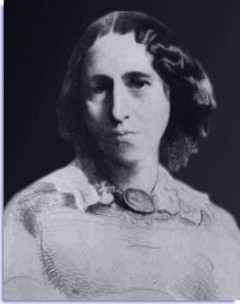
 george eliotI remember my mother telling me that she didn't appreciate SILAS MARNER until she read it as an adult. Maybe that's why George Eliot never made it on the reading lists for AP English in High School or for any of my liberal artsy classes throughout College. Or maybe it's a function of her gender, still working against her after all these years. Whatever the case, I had to wait until after college to discover her on my own, just as I had with Virginia Woolf and Carson McCullers and Eudora Welty.

I'd read SILAS MARNER and thought it good, but it's MIDDLEMARCH that has made  me a devotee, with its rich complexity of human experience, wrought in compassionate yet unflinching detail. And now, I'm reading MY LIFE IN MIDDLEMARCH, by Rebecca Mead, and finding there is so very much more to love about George Eliot as a person, too.

Her life is a reminder to me that lives can, do and have traveled many and varied roads, and that human beings change and grow and shift over time. In today's age of social media's curated lives, it's easy to fall back on the notion that there is a "right" kind of life to have - the kind portrayed in the media and then reinforced by our own hands through our culled and cropped and sanitized facebook posts. George Eliot was complicated and shifting, a brilliant, ugly, opinionated working woman, religious and then not, a stepmother of sorts, living for years with another woman's husband as if he were hers and his children were hers, a woman moving fiercely and confidently through a man's world, grabbing hold of her identity, opening herself to belief, experience, love, change. Her work is full to bursting with the varied truths of human life, forcing us to look at and understand a full tapestry of characters shaded in grays, not black and whites, characters whose lives are not writ large and grand but march in the middle (which I believe is the intent of that title).

I am tremendously excited by the prospect of reading her other works, more excited, at the moment, than I am about working on my own writing. Perhaps I am beset a bit by the humility that always overcomes me when I stand face to face with truly great literature, and then look back at the dwarfed image of my own work. But writers read, and become better writers in the process, and I can think of no better mentor, just now, than George Eliot, nee Mary Ann Evans.

Saturday, March 07, 2015

Valuing Nonfiction

Lately, I've found my mind overly preoccupied with my job as a teacher. That's not hard to do. It's one of those jobs you don't leave behind when you walk out the door at the end of the day. But sometimes, I'm practically an addict about it, my brain obsessively revisiting the well of conundrums, puzzles, reminders and other assorted mental engagements connected to my class, my students, my teaching goals, my responsibilities.

Normally, fiction - my own or someone else's - would be my escape of choice. Spending time on my own writing helps my mind shift gears, a healthy palate cleanser, as the mental engagement of creating story is strong enough to muscle-out the other preoccupations. Likewise, losing myself in another writer's work can transport me from the thousand-and-one worries and to-do-lists that prey upon my mind.

This week, however, it's been nonfiction. I often think of nonfiction as a means of educating myself, staying informed - something your doctor might tell you to do, like eating kale because it's good for you. But lately, I've developed a new view. Nonfiction can bring me outside myself, providing a welcome dose of perspective, reminding me of the big picture, the world beyond my own gray matter. It's mental fresh air. The camera of my mind pans out from its default position of introverted close-ups to take in the wider sweep of reality and humanity in a way that fiction cannot, since the world of a fictional narrative ultimately exists only in my own mind. Nonfiction, with its inherent link to the real lives and minds of other people outside myself, can be an antidote to self-absorption, reminding me that I am not, in fact, an island, but rather a part of the great continent of humanity.


Sunday, February 15, 2015

Twilight, Fifty Shades, the Stanford Scandal and the Brontes: What's Wrong with our Narrative of Romance

Brace yourself. This post is longer and perhaps more loaded than usual. There are 2 parts. The first, embedded in the title, springs from the recent social media explosion of push-back against FIFTY SHADES OF GRAY. The second is an examination of another part of the problem, a high-brow infatuation with the literal objectification of women, particularly in cinematic tales, that serves as the yin to part 1's yang, the dysfunctional male version of the same narrative of gender relations. Together they form a fundamentally cracked core.


Let's start with part 1. Social media has recently erupted with what seems to be the sudden, overnight realization that the pop culture phenomenon FIFTY SHADES OF GRAY does, in fact, romanticize and glorify violence against women, presenting it, and the woman's self-debasement, as erotic, sexy, and desirable. Full disclosure: I haven't read the book, don't intend to, and don't plan on seeing the movie. My goal here isn't to critique the book itself but rather to examine the phenomenon that led to its popularity, especially among women, including many strong and intelligent women of my own acquaintance. Oddly enough, the current backlash against the book was triggered not by the book but by the movie. There was very little of this level of push-back when the story existed in the private, semi-hidden world of the page. Its migration to cinema seems to have caused the scales to fall from our eyes.

From what I understand, FIFTY SHADES was born as TWILIGHT fan-fiction/erotica. That's not surprising. TWILIGHT, like FIFTY SHADES, experienced a supernova level of popularity out of all proportion to the quality of the writing or the originality of the story. I DID read TWILIGHT, in an effort to understand the source of its explosive success. It was built on a familiar blue-print of romance, one with its roots in such literary classics as WUTHERING HEIGHTS and JANE EYRE. It is a blue-print that cannot simply be dismissed as "passive, victimized woman and aggressive, domineering man." It's more complicated than that. Both the lead women in the Brontes' tales are strong, forceful personalities. Cathy meets Heathcliff's abusive, unlikeable behavior with her own brand of manipulative torture. Jane Eyre stands up to Rochester time and again. And yet, in the end, the suffering of the women involved, and the self-destructive and tragic nature of the relationships, serve as models of romantic love.

That brings us to the Stanford scandal I was reading about in the New York Times Magazine today. It is a complicated tale in which a mentor-mentee relationship between a rich, successful, powerful man and an ambitious, intelligent, beautiful young woman developed into a long-term sexual relationship, and then devolved into a break-up and accusations of abuse, kidnapping, torture and more. Both sides seemed confused, hurt and genuinely convinced of their own victimhood. As I read the story, I found myself thinking about the struggles I myself went through in defining my own role as an adult woman, a sexual being, and a person in a relationship. And I found myself thinking about young men I have known who have struggled to make sense of a strange kind of "I love you, I hate you, you're bad for me, you're good for me" tug of war with young women in their lives. The young men were so confused and it was so hard for me to explain to them what it's like for a young girl trying to make sense of the tangled myriad of messages about women and women's sexuality that we encounter, messages whose extremities are "the virgin and the whore" but whose entirety stretches across a vast continuum between those two defining poles.

Men and women step into this messy, toxic soup and try, and fail, to connect. The line between abuse and screwed-up gender relations is often not as clear as we'd like it to be, for either side. The foundations upon which both men and women stand are made of a goopy glop of damaged and damaging narratives. The glop goes so deep, that we as women regularly re-embrace it in some shiny new form that pretends to be ours alone, that pretends to be revolutionary and empowering. TWILIGHT. FIFTY SHADES. Stripper poles as exercise. Madonna. We keep deconstructing it and reconstructing it, smashing it apart and then putting it back together in a new shape, hoping it will somehow be better, stronger, clearer. It never is. Once in a while we step back and paint it large and in black and white terms and blink, wide awake with perspective, and say "Good God! What was I thinking? That's abuse. That's unhealthy. That's destructive."

We as women want to be strong and independent, but we also want to feel safe enough to be vulnerable. We want romance, but we have so many screwed up definitions of what that is that we can't even begin to make sense of them. We want to be sexual creatures, but the narratives around our sexuality are so loaded with misinformation and confusion that we never step into that territory baggage-free.

Time for Part 2. Take it back to COPPELIA, a ballet about a scientist who creates a life-like doll of a girl and then he and the hero both fall in love with the mechanical doll, while the real girl on whom she is based tries to destroy the doll. Roll forward to WEIRD SCIENCE, in which a couple of high school nerds build themselves a woman as a science experiment. She is gorgeous and she is theirs. Moving on to BLADE RUNNER, in which the hero's principal love interest is a beautiful female android. Or let's look at LARS AND THE REAL GIRL, a film presented as quirky indie with heart, in which a quiet, misunderstood guy falls in love with what's basically a mannequin and treats it as his girlfriend. How about HER, which traces the relationship between a man and his digital technology woman? Hell, we could even go further - Shakespeare's WINTER'S TALE (king falls in love with a statue) or PYGMALION (both the play and its foundational myth center on a man falling in love with a female of his own creation). All of these (except WEIRD SCIENCE) are tales embraced by the world of high-brow culture, and deservedly so. They are (except for WEIRD SCIENCE) complex, artfully told examinations of humanity and love. So why do they bother me so much? Because, at their most basic level, these high-brow works share a fundamental root with WEIRD SCIENCE.

All of these stories cast the woman in the role of the object. Am I missing something? Is there a corresponding collection of popular narratives out there in which the man is cast in that role? I don't think so. The closest thing that comes to mind is Mary Shelley's FRANKENSTEIN, in which a woman author creates a tale of a man building another man. Shelley's creation is deformed and rejected and his rejection turns him into a  destructive, violent and tragic being. The woman created for him is torn limb from limb before she ever comes to life.

Women cast the men in the role of the dangerous, destructive predator. Men cast women in the role of the malleable object. Both of these narratives are just plain messed up, and they mess us up. They mess up our relationships with one another, they cloud our vision, they turn us from our best selves. Do men truly want a doll, a thing of their own creation, a disembodied technological entity, something they can mold and manipulate to their fantastical wishes instead of a real, three-dimensional, complicated living creature? I don't think so, any more than women want an abusive, domineering master as their sexual and romantic partner. But these are the fractured narratives we keep telling and retelling and they wreak havoc on the relationship between the sexes.

Any generalizations like those I've made here come with the risk of oversimplification. What makes these questions truly problematic is how many of these narratives are NOT poorly written drivel but are instead complex works of art truly worthy of being called classics. Yet they are emblematic of fundamental flaws in the foundational narrative upon which so many of us build our understanding of gender relationships.

So what do we do? Examine our narratives. Ask why a given story resonates. Define our relationships on their own terms and not on flawed societal constructs. Recognize when an old, worn, destructive vision snakes its way back into our collective consciousness under the pretense of newness and place it under a microscope. Name it for what it is. Ask questions of it. Seek to see one another, and ourselves, as we are, apart from the centuries worth of baggage of destructive context. Try, a bit at a time, to rewrite the narratives from scratch for future generations.

Monday, January 19, 2015

Small Successes

It's that time of the year where my plate is so full something's bound to slide off the edge. When that happens, I can get a bit discouraged about my writing. I want to work on revising the novel, but I'm short on big chunks of time for the kind of full-immersion work that requires. So I've been hovering around my short stories. Which brings me to the small successes.

Small success #1: I finished a short story that took a degree of commitment to revision that I have often been unwilling to give. I had to restructure, unpack, explore characters to the extent I might for a novel. I fought through my desire to "just be done with it" and to ignore my wise writing partner's advice. In the end, I had a piece I feel so proud of and excited about that I sent it off to one of those "they never say yes" markets. Who knows what will happen? But I'm jazzed to have an awesome new story in my stable ready to race.

Small success #2: I got a rejection for one of my stories that was personal and incredibly complimentary, telling me that I should definitely keep sending the story out. I'm so grateful to the person who took the time to write that encouraging "yes within a no."

Small success #3: The other rejection I just got was an impersonal form rejection for a piece that was targeted perfectly for that specific market. After a brief bout of discouragement, I looked back at the piece and could see that while the subject matter was right for that market, the piece itself was a bit of a mess and hadn't been ready to send out. I had been impatient, and it showed. So what's the success here, you may ask? The success is that I was able to recognize that and learn from it rather than wallowing in disappointment. I brought the piece to my critique partner and she's given me some great advice on how to re-enter the piece and start fixing it. And now I know I have the persistence for the kind of major overhaul revisions needed on this type of short story, the kind that could be a novel but will shine best in the short form.

Small success #4: One of my short stories, which appeared in the latest issue of the online magazine Kaleidotrope (see my horn-tooting post), received a twitter review. Yes, a twitter review. A 150 character response from Tiny Reviews, calling it a "subversive, metafictional fairytale." Seeing that someone else, someone I don't know, got what I was going for is a great rush, because, after all, connecting with a reader is really what it's all about.

Small success #5: An online book club chose my story "The Battle of the Pewhasset Pie Palace" for their discussion group. There was a transcript of the online discussion. Once again, I got to feel the rush of seeing my story and characters reach across and connect with readers who haven't met me. They got what I was going for, and while there were criticisms, they were all valid. What I'm realizing is praise or criticism actually carries less of an electronic jolt than that feeling of having connected, having communicated something successfully.

So there you have it. Small successes. Sometimes they're the only kind there is. If you're hitting one of those discouraging spots, look about for what could count as a success, however small.

Friday, January 02, 2015

Tooting My Horn in the New Year

We interrupt this regularly scheduled program for a brief bout of personal horn-tooting. My short story, "Bread of Life," a feminist spin on the golem legend, with a dose of meta-commentary on the role and power of storytellers and storytelling, appears in this month's issue of Kaleidotrope, a well-respected online 'zine of sci-fi, fantasy and other forms of speculative fiction. My story sits alongside several other intriguing works by Michael Andre-Driussi, Stephen J. Barringer, and Gemma Files. So, in the spirit of self-promotion and braggadacio, today's post is devoted exclusively towards encouraging you to check it out. Proceed, link-followers! Go forth and read!

Happy New Year!

Wednesday, December 31, 2014

A Post in Praise of Maria Popova's "Brain Pickings"


This is a plug, a plug for one of the most worthwhile, intelligent, well-researched, thought-provoking blogs anywhere on the internet. Brain Pickings, written by Maria Popova, is consistently packed with insight, and with explorations of fascinating written works both old and new. I am never disappointed when I follow Ms. Popova down the rabbit hole. In evidence, I submit a short section from her blog, her answer to an 11 year old girl's question "Why do we need books?"

Some people might tell you that books are no longer necessary now that we have the internet. Don’t believe them. Books help us know other people, know how the world works, and, in the process, know ourselves more deeply in a way that has nothing to with what you read them on and everything to do with the curiosity, integrity and creative restlessness you bring to them.
Books build bridges to the lives of others, both the characters in them and your countless fellow readers across other lands and other eras, and in doing so elevate you and anchor you more solidly into your own life. They give you a telescope into the minds of others, through which you begin to see with ever greater clarity the starscape of your own mind.
And though the body and form of the book will continue to evolve, its heart and soul never will. Though the telescope might change, the cosmic truths it invites you to peer into remain eternal like the Universe.
In many ways, books are the original internet — each fact, each story, each new bit of information can be a hyperlink to another book, another idea, another gateway into the endlessly whimsical rabbit hole of the written word. Just like the web pages you visit most regularly, your physical bookmarks take you back to those book pages you want to return to again and again, to reabsorb and relive, finding new meaning on each visit — because the landscape of your life is different, new, “reloaded” by the very act of living.
Looking for something worth reading? Go visit Brain Pickings. Looking to keep the internet a home for more than cute cat videos and celebrity gossip? Make a donation to Brain Pickings. Thus endeth the plug.

Friday, December 26, 2014

Creativity vs. Mindfulness

This summer, I read a lot about the practice of mindfulness - being present, in the moment. I felt it was work I needed to do, something with which I struggled. My mind has a tendency to wander, to get lost in the forest of thought, and I was feeling some negative effects of that tendency, such as leaving my body when my husband was talking to me about something, or losing track of where I was going when I was driving, or eating an entire meal without really tasting it, or worrying so much about the next things I had to do that I failed to notice the beauty right in front of my face. You know - little stuff like that. So, I read up on being present. I read books by Thich Nhat Hanh, and books about Christian contemplative practices, and Barbara Brown Taylor's AN ALTAR IN THE WORLD. And I practiced being mindful and present as I walked, as I ate, as I moved through my day. I started honoring a digital Sabbath every Saturday so I would choose presence over technology. I mean, I worked on this stuff.

But just now I am reading a book called THE CREATIVE MIND, by Nancy C. Andreasen.  It explores the nature of creativity, examines a wide range of studies on the subject and looks at the current neuroscience behind it. One section struck me today, a  section delineating what appear to be common threads to the creative process. The first such thread, or stage, is a kind of trance, an entering into another world, "a state apart from reality." I recognize this stage. It's something of an out of body experience. I sometimes liken it to going down the rabbit hole. I have talked about this stage in the process with other writers, too. It is a necessary step in the evolution of a creative endeavor.

And yet, you cannot enter this "out-of-body", creatively fertile mental state if you are practicing being present, being in your body. There is a kind of tension between the creative process and the practice of being present or mindful.

I must admit, I felt a slight eureka sensation as I struggled to articulate this idea for myself. I felt I had glimpsed, however briefly, the reason that I am prone towards absent-mindedness and struggle with mindfulness.

To have the raw material that makes poetry and fiction sing, a writer ought to practice mindfulness. After all, how can you fully evoke the sensations of a given place or experience if you don't allow yourself to be present and experience sensations in your own life. On the other hand, the writer must cultivate the capacity for non-presence, for that out-of-body "state apart from reality" in order to enter fully into the creative realm.

Perhaps if you are prone to creative endeavors you are also likely to struggle with mindfulness in your day to day life. Perhaps the line between presence and wandering is blurred for the creative mind. Perhaps this is where practice comes in. If you regularly engage in the writing practice and in mindfulness, your skills at slipping into and out of the two states - presence and the creative zone - become stronger, and more within your own control. Or perhaps it is a fool's game to attempt to control such things.


Friday, December 05, 2014

Teaching Children about Writer's Block

Last year, I explicitly taught my third graders about the term "writer's block." It was a remarkable thing to see how it changed their view of getting stuck or not knowing what to write about. They still got stuck, but suddenly, they knew this didn't mean they "couldn't write." They knew, instead, that this was something real writers, published writers, experienced and gifted writers, have struggled with throughout history. It made them part of the writing community.

Mind you, I didn't just tell them what writer's block was, I gave them some strategies writers use to try to break through writer's block. Their faces lit up in recognition as they realized some of these strategies are things they themselves have done, or could try. "I do that!" "That's what I do!" Getting up and stretching intentionally, in an effort to break through writer's block, with the goal of getting back to your writing, is very different than aimlessly wandering around the room sharpening pencils and annoying other writers.

It wasn't a fancy or complicated lesson. I simply told the kids that getting stuck happens to even the best writers, that it has a name, that they are not alone in this struggle, and that there are things they can try to help them get past it. I gave them a list of strategies, told a little about my own writer's block experiences, and about which strategies I or my writing friends used, and asked them to mark any of the strategies they thought they could try. I also gave them a visual, a quick sketch of a stick figure walking into a wall. We talked about the strategies as ways of dealing with the wall - one brick at a time, or digging underneath the wall or flying over it or going around it, etc. - thinking differently about it, in other words.

I revisited this lesson this year, with similar results. Suddenly, my students are seeing themselves as writers (which has been the goal all along, but it hit a new level after this conversation). "Is there an age limit on how old you have to be to publish a book?" asked one young man. "Can writers get ideas from other writers?" asked another, whereupon I told him about critique groups, and how writers plan times for working alone and times for connecting with other writers, and that it's important to know how to help yourself move through writer's block when you are working alone, but that another day I could teach them about writing groups.  At the end of the lesson, as we transitioned to the computer lab, the room was still buzzing. "Ms. McGean," announced another young author, eyes shining, "I broke through my writer's block today!"

When your enemy has a name, it loses power.

Popular Posts

Contributors